
Toyota Sienna Service Manual: Terminals of ecm
Sfi system
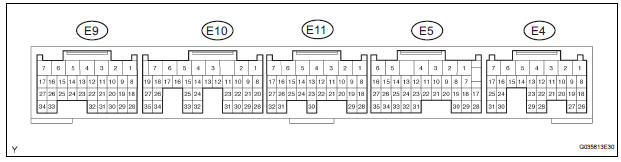
Hint:
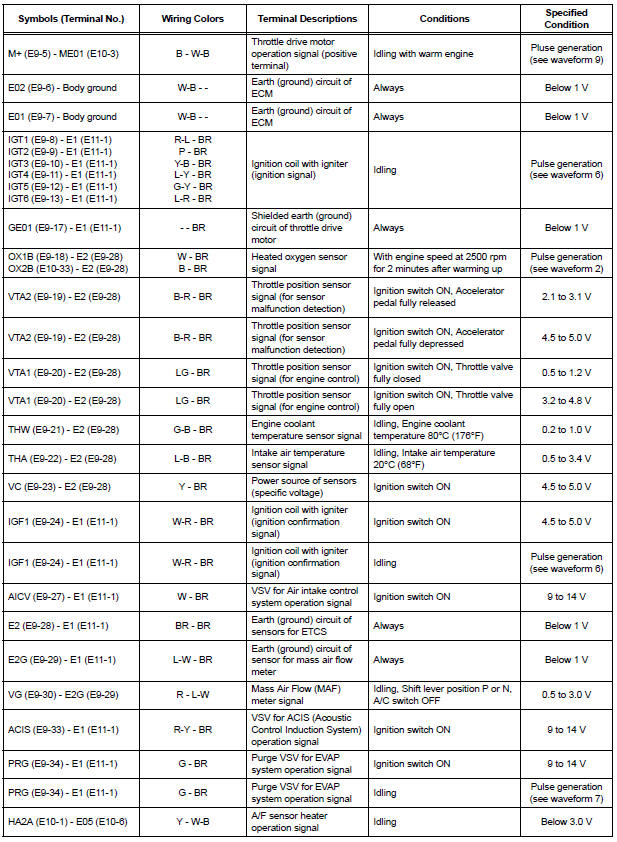
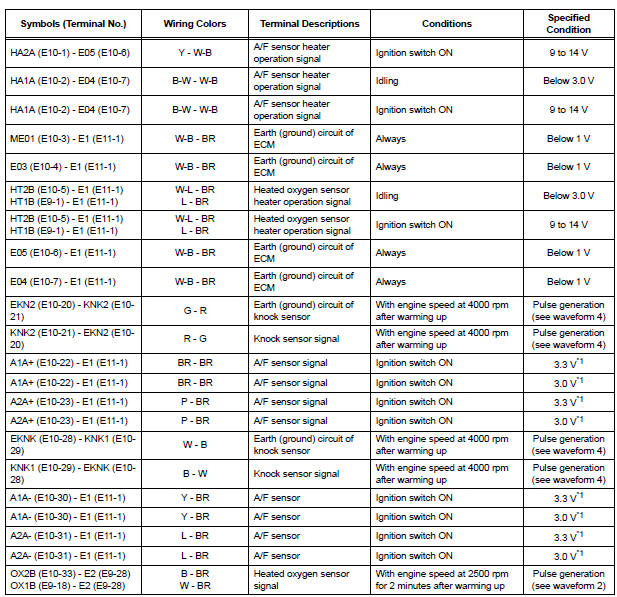
The standard normal voltage between each pair of the ECM terminals is shown in the table below. The appropriate conditions for checking each pair of the terminals are also indicated.
The check results should be compared with the standard normal voltage for that pair of terminals, listed in the "Specified Condition" column.
The illustration above can be used as a reference to identify the ECM terminal locations.
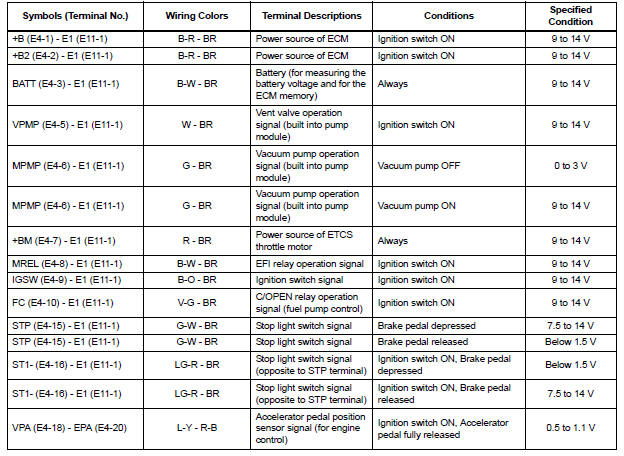
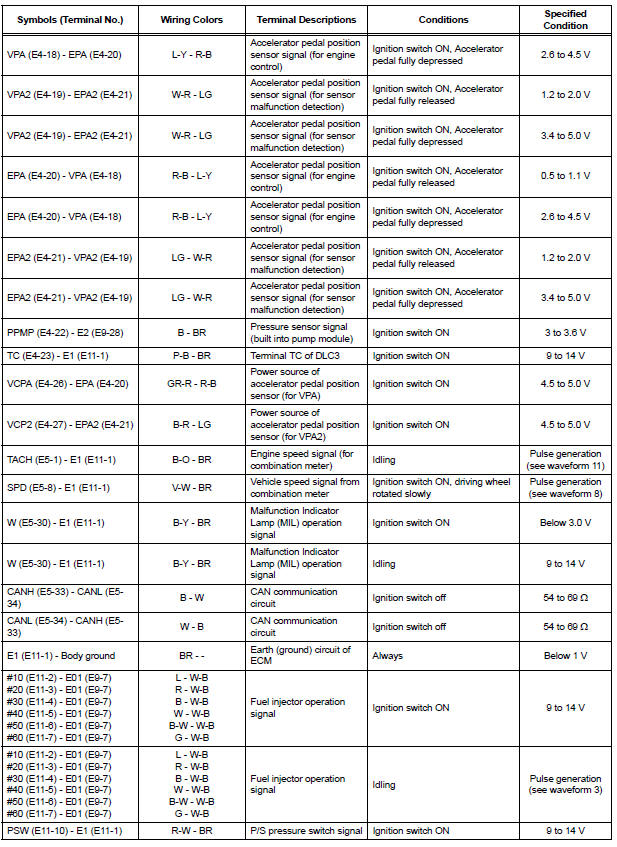
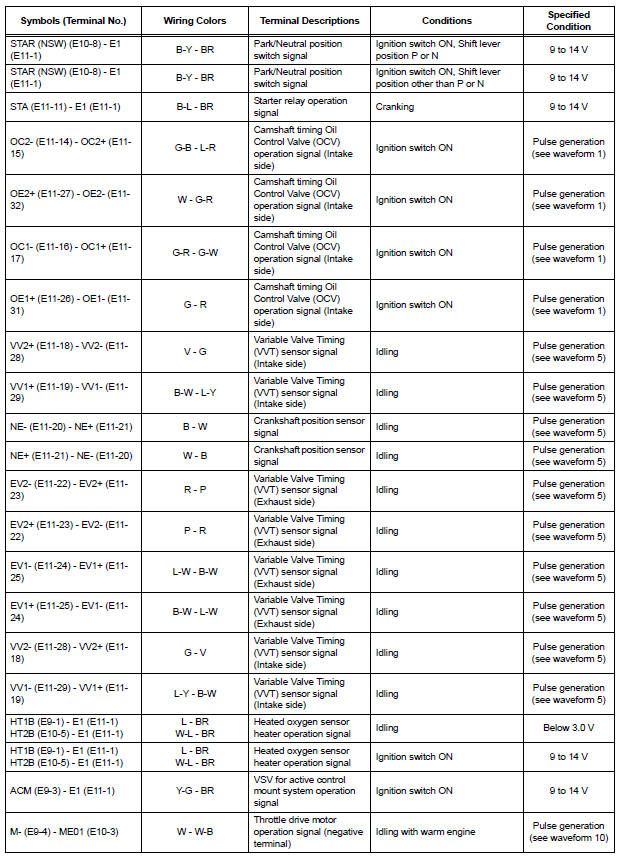
*1: The ECM terminal voltage is constant regardless of the output voltage from the sensor.
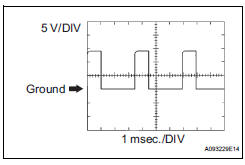
(a) WAVEFORM 1
(1) Camshaft Timing Oil Control Valve (OCV)
operation signal

HINT:
The wavelength becomes shorter as the engine rpm increases.
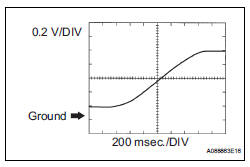
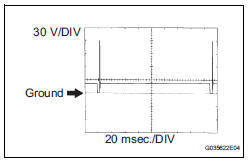
(b) WAVEFORM 2
(1) Heated oxygen sensor signal

HINT:
In the DATA LIST, item O2S B1S2 shows the ECM input values from the heated oxygen sensor.
(c) WAVEFORM 3
(1) Fuel injector operation signal

HINT:
The wavelength becomes shorter as the engine rpm increases.
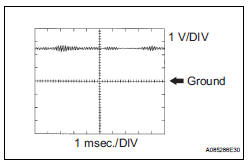
(d) WAVEFORM 4
(1) Knock sensor signal

HINT:
- The wavelength becomes shorter as the engine rpm increases.
- The waveforms and amplitudes displayed differ slightly depending on the vehicle.
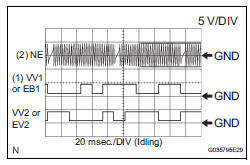
(e) WAVEFORM 5
(1) Variable Valve Timing (VVT) sensor signal (1)
(2) Crankshaft position sensor signal (2)
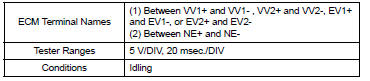
HINT:
The wavelength becomes shorter as the engine rpm increases.
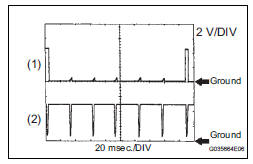
(f) WAVEFORM 6
(1) Igniter IGT signal (from ECM to igniter) (1)
(2) Igniter IGF signal (from igniter to ECM) (2)

HINT:
The wavelength becomes shorter as the engine rpm increases.
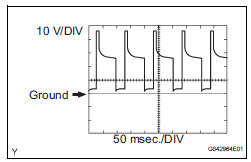
(g) WAVEFORM 7
(1) Purge VSV for EVAP system operation signal

HINT:
If the waveform is not similar to that shown in the illustration, check the waveform again after idling for 10 minutes or more.
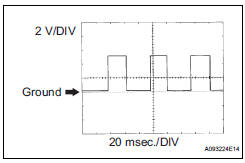
(h) WAVEFORM 8
(1) Vehicle speed signal

HINT:
- The wavelength becomes shorter as the vehicle speed increases.
- Depending on the vehicle, the output waveform voltage may rise to 12 V if influenced by optionally installed systems.
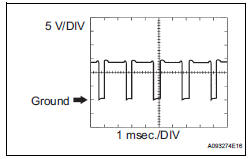
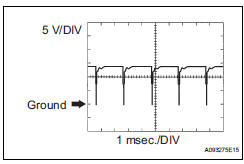
(i) WAVEFORM 9
(1) Throttle drive motor operation signal (positive
terminal) 
HINT:
The duty ratio varies depending on the throttle actuator operation.
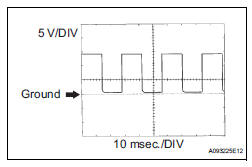
(j) WAVEFORM 10
(1) Throttle drive motor operation signal (negative
terminal) 
(k) WAVEFORM 11
1) Engine speed signal

HINT:
The wavelength becomes shorter as the engine rpm increases.
 Problem symptoms table
HINT:
When a malfunction is not confirmed by a DTC (Diagnostic
Trouble Code) check and the cause of problem cannot be
identified through a basic inspection, troubleshoot according
to the priority ...
 Diagnosis system
DESCRIPTION
(a) When troubleshooting OBD II (On-Board
Diagnostics) vehicles, an intelligent tester
(complying with SAE J1987) must be connected to
the DLC3 (Data Link Connector 3) of the vehicle.
...
Other materials:
Adjustment
HINT:
If the malfunction does not disappear by following the
procedure in ADJUSTMENT and the rear No. 2 seat
assembly needs to be replaced, do not disassemble the rear
No. 2 seat assembly.
1. ADJUST FRONT LEG
HINT:
Perform the following procedure if the inner leg does not
lock.
P ...
Shift Solenoid "E" Performance (Shift Solenoid
Valve SR)
SYSTEM DESCRIPTION
The ECM uses signals from the vehicle speed sensor to detect the actual gear
position (1st, 2nd, 3rd, 4th
or 5th gear).
Then the ECM compares the actual gear with the shift schedule in the ECM memory
to detect mechanical
problems of the shift solenoid valves, valve b ...
Headlight leveling switch
ON-VEHICLE INSPECTION
1. HEADLIGHT LEVELING SWITCH
Connect the battery positive (+) lead to the terminal
1 and the battery negative (-) lead to the terminal 5.
Measure the resistance between the terminal 4 and
the battery negative (-) lead when headlight leveling
switch ...
