
Toyota Sienna 2010-2026 Owners Manual: Maintenance data (fuel, oil level, etc.)
Dimensions and weights
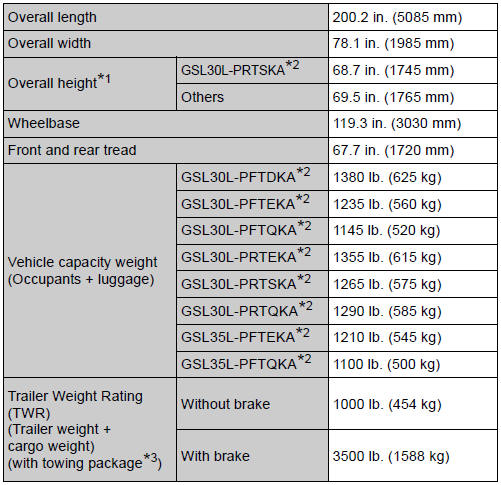
*1: Unladen vehicle
*2: The model code is indicated on the Certification Label. For details, see
“Vehicle identification� below.
*3: The towing package is required.
Toyota does not recommend towing with this vehicle without the towing package.
Vehicle identification
Vehicle identification number
The vehicle identification number (VIN) is the legal identifier for your vehicle. This is the primary identification number for your Toyota. It is used in registering the ownership of your vehicle.
This number is stamped on the top left of the instrument panel.
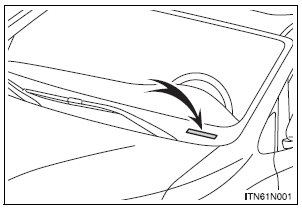
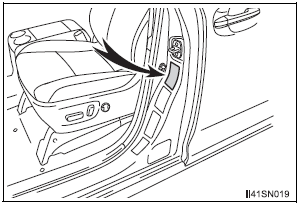
This number is also on the Certification Label on the driver’s side center pillar.
Engine number
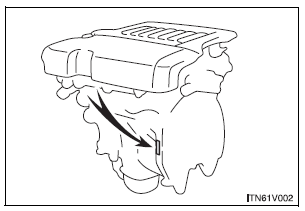
The engine number is stamped on the engine block as shown.
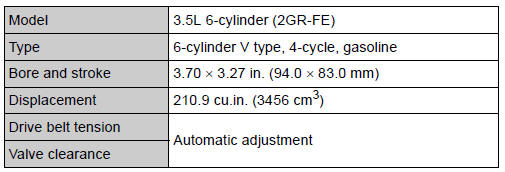
Engine
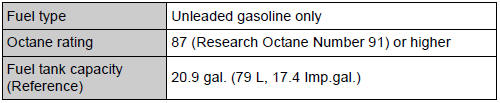
Fuel
Lubrication system

*: The engine oil capacity is a reference quantity to be used when changing the engine oil. Warm up and turn off the engine, wait more than 5 minutes, and check the oil level on the dipstick.
Engine oil selection
“Toyota Genuine Motor Oil� is used in your Toyota vehicle. Use Toyota approved “Toyota Genuine Motor Oil� or equivalent to satisfy the following grade and viscosity.
Oil grade: ILSAC GF-5 multigrade engine oil Recommended viscosity: SAE 0W-20 SAE 0W-20 is the best choice for good fuel economy and good starting in cold weather.
If SAE 0W-20 is not available, SAE 5W-20 oil may be used.
However, it must be replaced with SAE 0W-20 at the next oil change.
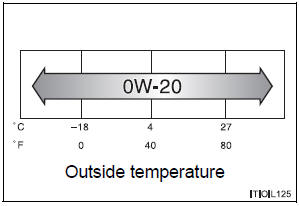
Oil viscosity (0W-20 is explained here as an example):
- The 0W in 0W-20 indicates the characteristic of the oil which allows cold startability. Oils with a lower value before the W allow for easier starting of the engine in cold weather.
- The 20 in 0W-20 indicates the viscosity characteristic of the oil when the oil is at high temperature. An oil with a higher viscosity (one with a higher value) may be better suited if the vehicle is operated at high speeds, or under extreme load conditions.
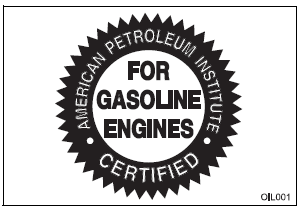
How to read oil container label: The International Lubricant Specification Advisory Committee (ILSAC) Certification Mark is added to some oil containers to help you select the oil you should use.
Cooling system
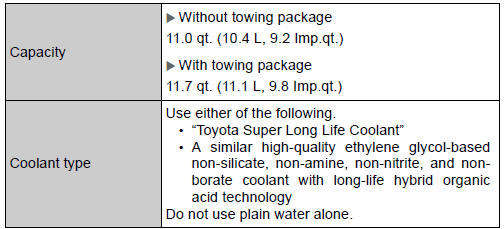
Ignition system

| NOTICE Iridium-tipped spark plugs Use only iridium-tipped spark plugs. Do not adjust spark plug gap. |
Electrical system
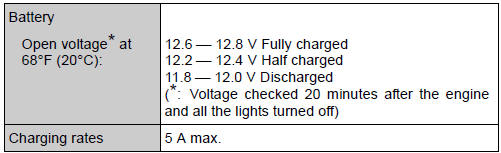
Automatic transaxle
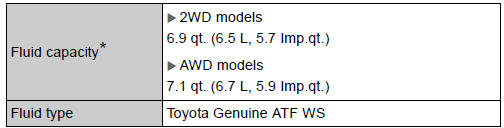
*: The fluid capacity is a reference quantity.
If replacement is necessary, contact your Toyota dealer.
| NOTICE Transmission fluid type Using transmission fluid other than “Toyota Genuine ATF WS� may cause deterioration in shift quality, locking up of your transmission accompanied by vibration and, ultimately, damage to the vehicle’s transmission. |
Transfer (AWD models)

Your Toyota vehicle is filled with “Toyota Genuine Differential Gear Oil� at the factory. Use Toyota approved “Toyota Genuine Differential Gear Oil� or an equivalent of matching quality to satisfy the above specification. Please contact your Toyota dealer for further details.
Rear differential (AWD models)

Your Toyota vehicle is filled with “Toyota Genuine Differential Gear Oil� at the factory. Use Toyota approved “Toyota Genuine Differential Gear Oil� or an equivalent of matching quality to satisfy the above specification. Please contact your Toyota dealer for further details.
Brakes
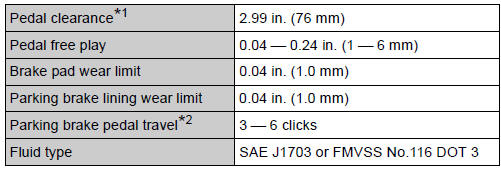
*1: Minimum pedal clearance when depressed with a force of 110 lbf (490 N, 50 kgf) while the engine is running *2: Parking brake pedal travel when depressed with a force of 67.4 lbf (300 N, 30.6 kgf)
Steering

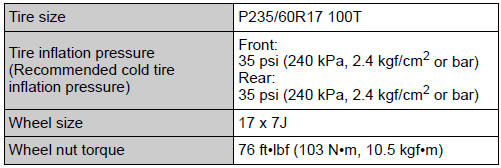
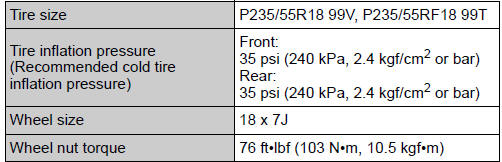
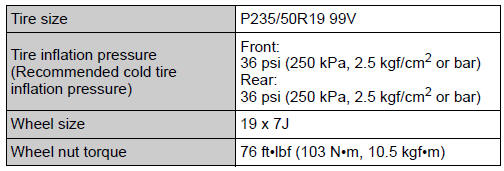
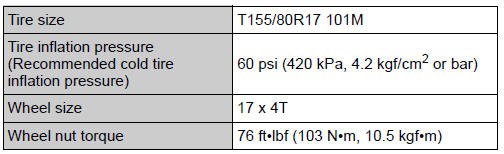
Tires and wheels
- 17-inch tires
- 18-inch tires
- 19-inch tires
- Compact spare tire (2WD models)
Light bulbs
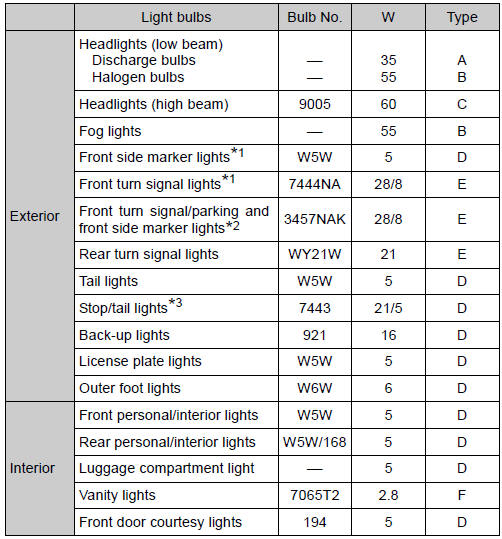
- D4S discharge bulbs
- H11 halogen bulbs
- HB3 halogen bulbs
- Wedge base bulbs (clear)
- Wedge base bulbs (amber)
- Double end bulbs
*1: Vehicles with LED type daytime running lights
*2: Vehicles without daytime running lights or with bulb type daytime running
lights
*3: Vehicles with bulb type stop/tail lights
 Specifications
...
 Fuel information
You must only use unleaded gasoline in your vehicle.
Select octane rating 87 (Research Octane Number 91) or higher.
Use of unleaded gasoline with an octane rating lower than 87
may result in en ...
Other materials:
Power Slide Door Pulse Sensor Malfunction on
Rear Right Door
DTC B2223 Power Slide Door Pulse Sensor Malfunction on
Rear Right Door
DESCRIPTION
A pulse sensor is built into slide door RH for jam and foreign
object detection and for slide door position
detection. The jam and foreign object detection feature of the pulse sensor
monitors the ...
SRS Warning Light does not Come ON
DESCRIPTION
WIRING DIAGRAM
INSPECTION PROCEDURE
1 CHECK BATTERY
Measure the voltage of the battery.
Standard voltage:
11 to 14 V
CHECK AND REPLACE BATTERY OR
CHARGING SYSTEM
2 CHECK CONNECTORS
Turn the ignition switch to the LOCK position.
Disconnect the negative (-) term ...
Rear Occupant Classification Sensor LH Collision
Detection
DTC B1787 Rear Occupant Classification Sensor LH Collision
Detection
DESCRIPTION
DTC B1787 is output when the occupant classification ECU receives a collision
detection signal sent by
the rear occupant classification sensor LH if an accident occurs.
DTC B1787 is also output when the front s ...
