
Toyota Sienna Service Manual: Removal
1. Remove engine under cover no.1 2. Disconnect cable from negative battery terminal 3. Drain automatic transaxle fluid (see page ax-131) 4. Remove automatic transaxle oil pan subassembly
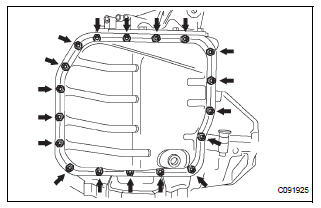
(a) Remove the 18 bolts, oil pan and gasket.
| NOTICE: Some fluid will remain in the oil pan. Carefully remove the oil pan so that the fluid remaining in the pan does not spill out. |
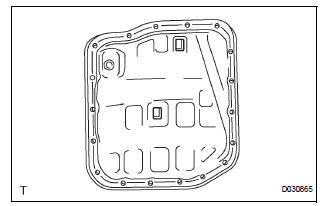
(b) Remove the 2 magnets from the oil pan.
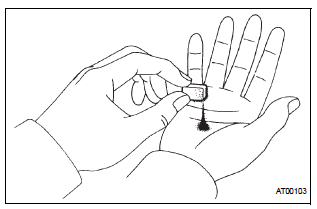
(c) Examine particles in the pan.
(1) Collect any steel chips using the removed magnets. Look carefully at the chips and particles in the pan and on the magnets to see the type of wear which might be found in the transaxle.
Result: Steel (magnetic): Wear of the bearing, gear or plate Brass (non-magnetic): Wear of the bearing
5. DISCONNECT TRANSMISSION WIRE
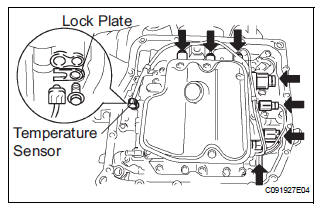
(a) Disconnect the 7 shift solenoid valve connectors.
(b) Remove the bolt and lock plate, and disconnect the ATF temperature sensor.
6. REMOVE VALVE BODY OIL STRAINER ASSEMBLY
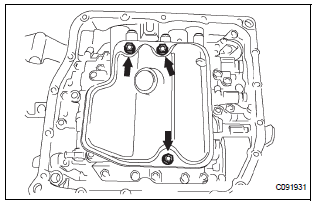
(a) Remove the 3 bolts and oil strainer.
| NOTICE: Be careful when removing the oil strainer as fluid will come out. |
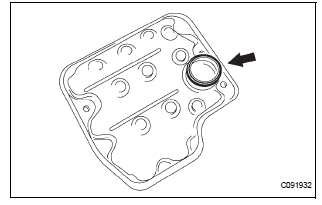
(b) Remove the O-ring from the valve body oil strainer assembly.
7. REMOVE TRANSMISSION VALVE BODY ASSEMBLY
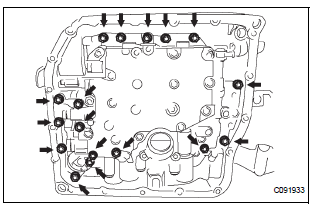
(a) Support the valve body assembly and remove the 17 bolts and the transmission valve body assembly.
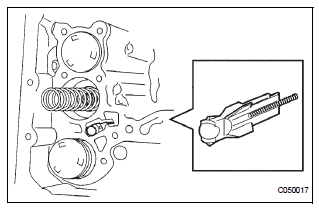
(b) Remove the check ball body and the spring.
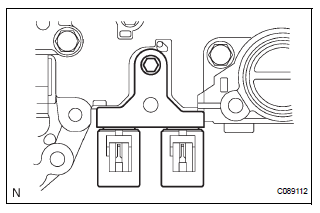
(c) Remove the bolt and lock plate from the valve body assembly.
(d) Remove the shift solenoid valve SL3 and SLT from the valve body assembly.
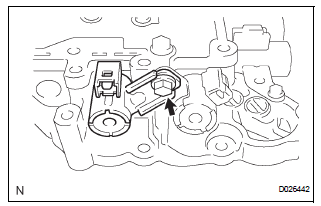
(e) Remove the bolt and shift solenoid valve S4 from the valve body assembly
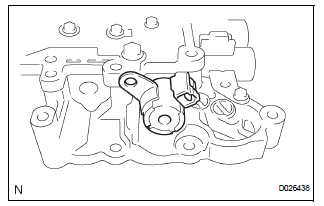
(f) Remove the shift solenoid valve SR from the valve body assembly.
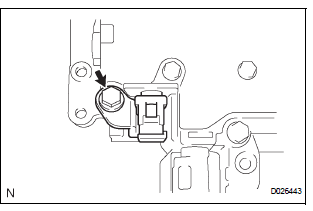
(g) Remove the bolt and shift solenoid valve DSL from the valve body assembly.
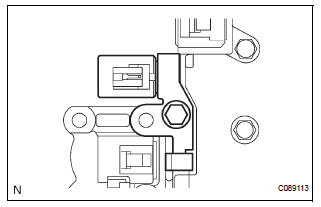
(h) Remove the bolt and shift solenoid valve SL2 from the valve body assembly.
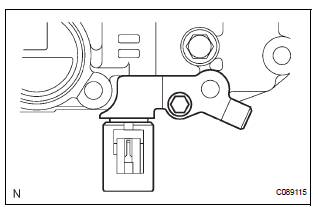
(i) Remove the bolt and shift solenoid valve SL1 from the valve body assembly.
 Valve body assembly
Components
...
 Installation
1. Install transmission valve body assembly
(a) Install the shift solenoid valve SL1 to the valve body
assembly with the bolt.
Torque: 6.6 N*m (67 kgf*cm, 58 in.*lbf)
(b) Install the shi ...
Other materials:
Installation
1. INSTALL BRAKE VACUUM CHECK VALVE
ASSEMBLY
(a) Install the brake vacuum check valve assembly and
check valve grommet to the brake booster
assembly.
2. INSTALL BRAKE BOOSTER GASKET
(a) Install a new brake booster gasket to the brake
booster with master cylinder.
3. INSTALL BRAKE MASTER CYLI ...
No Communication in Immobiliser System
DTC B2796 No Communication in Immobiliser System
DTC B2798 Communication Malfunction No. 2
DESCRIPTION
These codes are stored in the memory when a key that does not have a
transponder chip is inserted or if
communication between the key and transponder key ECU is impossible.
DTC No ...
Installation
1. INSTALL REAR NO. 2 SEAT ASSEMBLY LH
Place the rear No. 2 seat assembly LH in the cabin.
NOTICE:
Be careful not to damage the body.
Install the rear No. 2 seat assembly LH with the 2
bolts.
Torque: 29 N*m (296 kgf*cm, 21 ft.*lbf)
Install the locus cable with the ...
